
Antoni Gaudí
"Nothing is invented, for it's written in nature first."
Sex, Sexual Practices and Self-mastery
Power and submission are as ancient as sexual practises or penetration
The chapter presents the construction of men, women and children identity around sexuality in the Athenian, Roman and Christian societies. These 3 societies have in common their focus on self-mastery and search of purity defining sexual morality. The Athenian and the Roman societies give the higher status of citizenship to men base on their sexual performance or penetration practice to someone else. Christian society pushes morality away from sodomy towards celibacy and marriage sex.
Athenian men needed to prove their status of power as a man by practising penetration in other citizens. Boys were educated in philosophical matters under the rule of ‘paederastia’ to gain their citizenship as free Athenian male when they become adult. Free Athenian men who adopted a submissive role or females adopting a male role were seen as threatening the moral order. Although, male same-sex was regulated and practised. Athenian men could buy courtesans or exclusive sexual slaves, and they could penetrate male slaves, foreigners and boys. Athenian women were passive subjects with the aim of reproduction.
Roman sexual ethics were similar to the Greek’s. However, sodomy and ‘paederastia’ were not conditional on getting citizenship status. Roman women could own and have control over properties.
Christianity brought sexual renunciation to antiquity. However, it was a way to keep practising self-mastery. Self-mastery aimed to build distinction from other citizens and consolidate power and status. The meaning attached to sex changed from Christianity onwards, but not the meaning attached to self-mastery. Self-mastery means power and Christian society kept seeking it through celibacy, virginity, marriage sex and abstinence. Augustine himself was trying to achieve purity and perfection. I conclude that both, in favour of or against sexual practices, have the same goal: self-mastery, purity, superiority, dominance, statues, citizenship...
Sex, sexual practices, and gender are broader than the abundant sex of Athenians and Romans or Christians' abstinent sex. What else could it be? A question with as many answers as sensibilities collected in the LGBTQ+ community. It is hard to answer because performativity threatens the desire of replacing institutionalised practices. It is hard to answer because sex can be considered as important as a joke. It is hard to answer because sex can be seen as a mere chemical reaction. Therefore, everyone should be encouraged to find as many answers as needed. Take as starting point 'Books on love & sex'.
Self-mastery is a fascinating word that connects all societies because societies are made of individuals or communities that look for mechanisms to make someone feel inferior and to gather and feel the power. Ancient societies found this in the definition and delimitation of sexual practices. Nowadays, this pursuit of power or self/mastery is sought in the skin colour. Perhaps, skin colour, as a way to seek self-mastery, is becoming the mechanism of globalisation to filter and dose power to few. It is to be seen and contrasted by cultures and subcultures worldwide when coming together in cosmopolitan cities.
For Romans and Athenians, men kept a higher status in their societies as being possessors of an erectile sexual organ with apparent capabilities to submit women, gay men and children. The later underwent paederastia, a bureaucratic process which granted citizenship to young men. It is fair to wonder if anyone died virgin as everyone was exposed to one or other sexual practice to define their social status. And what about their mental health? What is the mental health of a sexualised society? Societies have the power to impact people’s way of living through policies and laws. For ancient societies, the definition of sex and sexual practices were a policy if not a law.
Mottier, V. (2008) Sexuality: A Very Short Introduction. New York: Oxford University Press, pp. 19-33
Books on Love and Sex
Love management while you are at university
 Catalan writer Bel Olid presents sex as learning and ever evolving experience and criticises perfomativity, masculinity and patriarchy. | 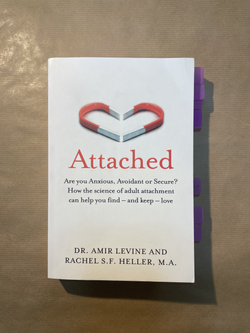 Scientific approach to dating and relationships. |  Collection of LGBTQ+ poetry made by Catalan poets. |  Irish writer presents a fresh and dark depiction of how power, social status and family influence the perception of sex and sexual practices. |
|---|
Action Plan
Guidance on how to face university and make the most of your resources.
Set long term goals and use the template ‘Plan Backwards from deadlines’
-
Schedule plenty of time to research for university assignments as it can be unfamiliar and difficult. Get to know different information sources. Be aware that ‘researching’ is a complex activity.
-
Use the template ‘Plan backwards from deadlines’ suggest 7 stages to break down a university project. It is useful to allocate a deadline for each stage. As a result, it is easier to assess the progress of a project: what is done? What is left to do? And what has not been done? This process is fairly similar to the Pre-Production process that different Creative Industries employ.
-
Collect online source in bookmarks folders.
-
Make sense of all information that has been collected. Put ideas into sections and define paragraphs with key and clear concepts.
-
Write the first draft as soon as enough information has been collected. Helps to identify new research points and the brain have a point of reference to allocate new ideas. Do not worry about grammar at this stage. The main goal is sense-making and relating ideas. For more information, check the Drafting Poster.
-
Rest ideas and thoughts in between drafts. It is good to resent your approach to refine your ideas. Rest, reset and refine.
-
Make use of any supporting tool and university services to identify development opportunities.
-
Create a list of the essentials factors that contribute to the success of the university experience. Find inspiration on the ‘University Experience’ section.
Make it visual and manipulative. Having physical documents to annotate on and go back to, somehow, helps the brain reduce anxiety and uncertainty.
-
Create a colourful calendar or have quick access to the template ‘Plan backwards from deadlines’.
-
Print relevant documents, use sticky notes, pens of different colours and any other stationery of benefit.
-
Make instructions, learning outcomes and notes accessible to check when need it. Write the learning outcomes on a reminders app or a sticky note.
-
Use sticky notes to collect write down ideas and put on a printed document or personal notes. Get inspiration on the section ‘Essay structure’.
Sacred instructions
-
Have instruction at hand. Printable version if it was possible.
-
Read instructions a couple of time, make notes and identify confusing points.
-
Avoiding instructions can lead to unnecessary workload. Ask for feedback to the tutor module and classmates.
Transferring skills
-
Engage with activities that require time management skills. Get those skills and find a way to transfer them to the academic scenario. Require organising skill like.
-
A workplace may provide organisational tools that are transferrable to university.
-
Get curious about other ways of organising their workload.
-
Get in contact with Academic services to get an expert opinion on developing projects for the university.
-
Learn to ask effective questions to make the most of online tutorials with a lecturer.
Environment of study
-
Aid your neuron connections: drinking plenty of water, seating on a comfortable chair, setting abundant light especially if working with screen most of the time, applying refreshing eye drops, practising ergonomics when possible, having little breaks to ‘rest, reset and refine.
-
Deactivate the spell checker. Avoid unnecessary attention the red mark underneath a misspelt word. The aim is to put ideas together.
-
Schedule time free of errands, responsibilities and screens. A hard worker deserves a break.
-
Mental hygiene is easy to forget but highly rewarding if it is looked after.